






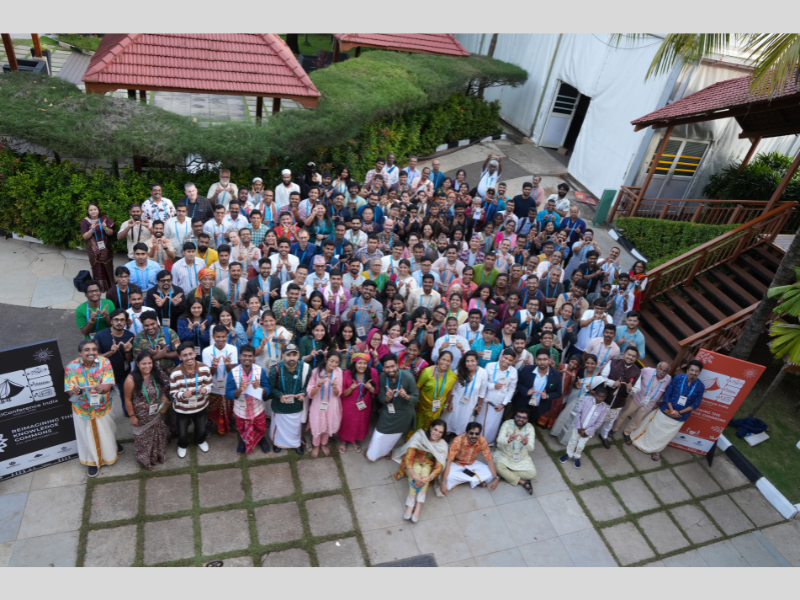
WikiConference India 2026 brings open knowledge community to Kochi
The fourth edition of WikiConference India concluded in Kochi, Kerala, on September 6, bringing together more than 220 Wikimedia contributors, researchers, educators, technologists and open-knowledge advocates from India and South Asia.
Held from September 4 to 6 under the theme ‘Reimagining the Knowledge Commons’, the conference focused on the role of human-created knowledge as artificial intelligence and large language models increasingly rely on multilingual content from Wikimedia projects.
Nearly 100 participants from India and 25 from Bangladesh, Nepal, Sri Lanka and Bhutan received scholarships to attend the conference.
Discussions covered community leadership in the age of AI, regional-language content, local knowledge, open participation, oral traditions, cultural documentation and ways to address knowledge gaps.
“From documenting places and cultural heritage to strengthening knowledge in regional languages, every contribution adds to a global common of freely available knowledge,” said Jinoy Tom Jacob, co-lead of the WikiConference India 2026 organising team and a member of the Kerala Wikimedia User Group.
Lorenzo Losa, chair of the Wikimedia Foundation’s Board of Trustees, said community-led, human-created knowledge had become more important amid declining trust in online information and the growth of AI-generated content.
The conference also marked the 25th anniversaries of Wikipedia and Creative Commons. Sessions explored Indigenous languages, community archives, cultural heritage and open knowledge.
Wikipedia is available in more than 25 Indic languages, including nearly all 22 scheduled Indian languages. India accounts for around 600 million Wikipedia page views each month, the fifth-highest traffic from any country.
Also Read: SuperGrads records 332 selections across IIM undergraduate programmes








Add comment